
Wellness
Charaka, Sushruta & Ashtanga Hridaya: Ayurveda's Three Classical Texts, Explained
Key takeaways
- Charaka Samhita, Sushruta Samhita and Ashtanga Hridaya are together known as the Brihat Trayi — the "Great Triad" — the three foundational classical texts of Ayurveda.
- Charaka Samhita is the classical reference for Kayachikitsa (internal medicine); Sushruta Samhita is the classical foundation of Shalya Tantra (surgery); Ashtanga Hridaya, written later by Vagbhata, is a practical synthesis of both, organised around Ashtanga — the eight traditional branches of Ayurveda.
- These texts describe traditional Ayurvedic classification, herb properties and practice — they are cited for historical and educational context, not as clinical trial evidence for any specific product.
- Tanvishataa's three herbs — Shatavari, Guduchi and Anantmul — are each referenced across these classical texts, which is why Dr Rucha grounds the brand's content in them rather than in modern marketing claims.
Why do we keep citing the same three texts?
"Doctor, why does every article quote a 2,000-year-old book?" It's a question Dr Rucha hears often. The honest answer: because that's where Ayurveda's classical knowledge actually lives. Every herb reference, every dosha explanation, every traditional preparation method on this site traces back to one of three texts — Charaka Samhita, Sushruta Samhita, and Ashtanga Hridaya. This post explains what each one is, so the citations you've been reading finally have a face behind them.
What is the Brihat Trayi?
Brihat Trayi literally means "the Great Triad." It's the traditional name for the three most authoritative classical texts of Ayurveda, compiled over roughly the first several centuries CE (exact dating is debated among scholars, as these texts were composed, redacted and added to over generations). Together, they form the classical foundation that later Ayurvedic literature, and modern BAMS education, is still built on.
What is Charaka Samhita?
Charaka Samhita is the classical text most associated with Kayachikitsa — internal medicine. Traditionally attributed to the sage Agnivesha and redacted by Charaka, it is organised into eight sthanas (sections), covering principles of treatment, physiology, diagnosis, and — most relevant to this site — the Rasayana Adhyaya, the classical chapter on Rasayana herbs traditionally used to support the body's long-term resilience. When we cite "Charaka Samhita" on herb pages like Shatavari or Guduchi, this is the text and the chapter we mean.
What is Sushruta Samhita?
Sushruta Samhita is the classical foundation of Shalya Tantra — surgery. Attributed to the sage Sushruta, it is widely regarded by medical historians as one of the earliest systematic texts on surgical practice, describing surgical instruments, wound management, and procedures including early reconstructive techniques. Beyond surgery, it also covers general medicine, anatomy, and — like Charaka Samhita — herb classification, which is why you'll see it cited alongside Charaka Samhita in our herb-profile posts (for instance, where it describes Guduchi under the name Amruta).
What is Ashtanga Hridaya, and how is it different?
Ashtanga Hridaya, composed later by the scholar Vagbhata, is often described as a practical synthesis of Charaka Samhita and Sushruta Samhita. Its name means "the heart (essence) of the eight branches" — referring to Ashtanga, the eight traditional divisions of Ayurveda (internal medicine, surgery, ENT/ophthalmology, paediatrics, toxicology, psychiatry, rejuvenation/Rasayana, and reproductive health). Many practising Ayurvedic doctors, including in modern BAMS curricula, consider Ashtanga Hridaya the most accessible of the three for everyday reference — it is where you'll most often see our posts cite dinacharya (daily routine) and ritucharya (seasonal routine) guidance.
Why cite 2,000-year-old texts instead of modern trials?
This is worth being precise about: citing Charaka Samhita or Sushruta Samhita tells you how a herb has traditionally been classified and used in Ayurveda — it is not the same as a modern clinical trial, and we don't present it as one. Ayurveda is a traditional system of medicine with its own textual and clinical lineage, distinct from modern evidence-based pharmacology. When Dr Rucha cites these texts, it's to be transparent about where the traditional knowledge comes from — not to claim scientific proof of any specific outcome.
How do these texts connect to Tanvishataa?
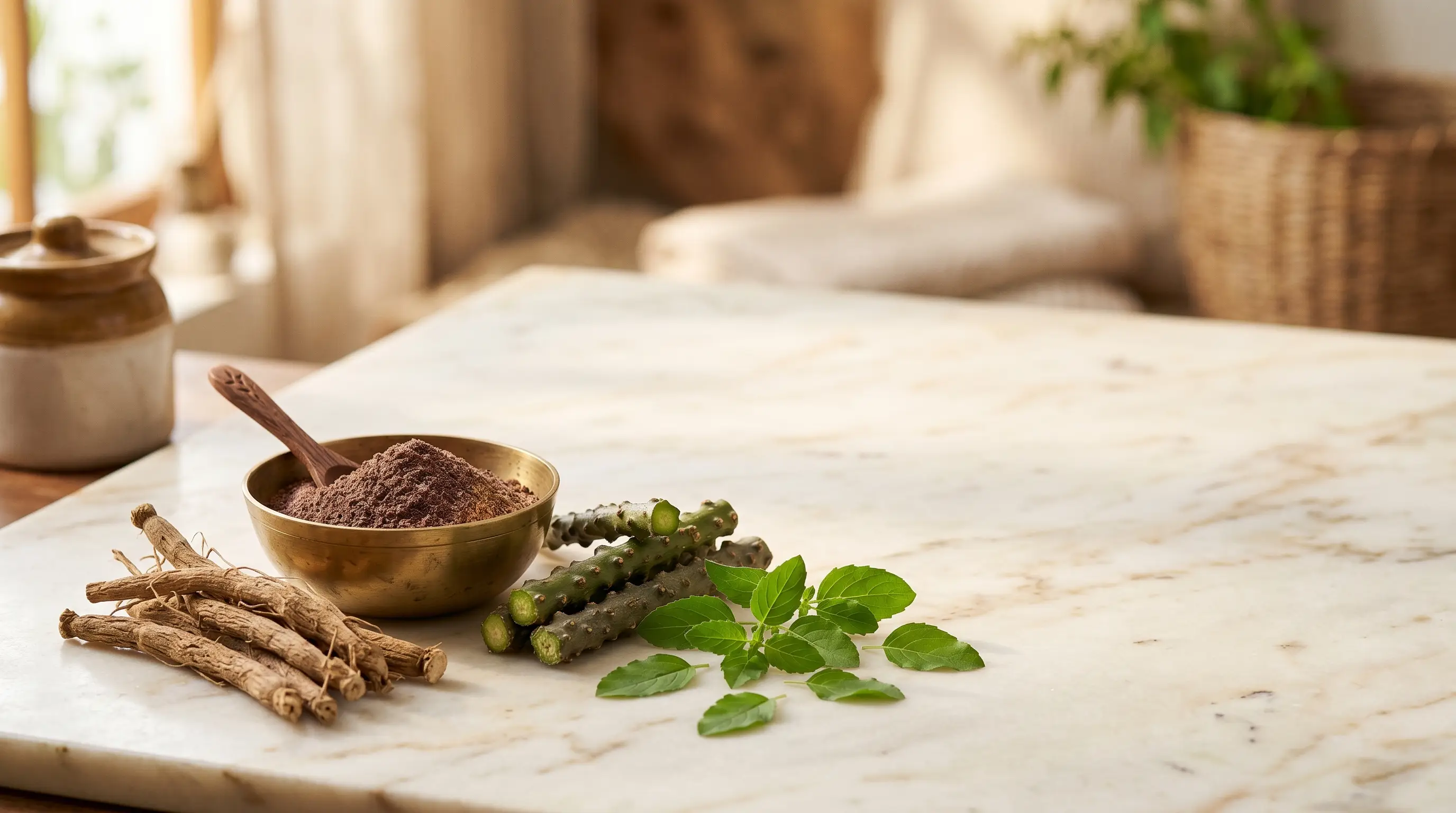
Tanvishataa's three herbs are each described across the Brihat Trayi and Ashtanga Hridaya: Shatavari (Asparagus racemosus) as a Rasayana in Charaka Samhita's Rasayana Adhyaya; Guduchi (Tinospora cordifolia) under the name Amruta in Sushruta Samhita, and as a tridoshic Rasayana in Charaka Samhita; and Anantmul (Hemidesmus indicus) among the traditionally cooling, twachya (skin-nourishing) herb group referenced across classical pharmacology. This is why our ingredient and benefit pages consistently point back to these three sources — it's the traceable classical basis for the formulation, not a modern efficacy claim.
What these texts don't replace
Classical Ayurvedic texts describe traditional principles, herb classification and practice as understood at the time they were composed — they are not a substitute for a present-day medical diagnosis or a qualified doctor's assessment of your specific health. If you're pregnant, breastfeeding, managing a chronic condition, or on regular medication, talk to a qualified doctor before starting Tanvishataa or any new herbal supplement.
When should you see a doctor rather than read a classical text?
Understanding the classical background of Ayurveda is valuable context — but it doesn't diagnose or treat anything on its own. Any persistent, worsening, or concerning symptom needs assessment by a qualified doctor, not just historical reading.
References & further reading
- Charaka Samhita — foundational classical text of Kayachikitsa (internal medicine), including the Rasayana Adhyaya (classical Ayurvedic text).
- Sushruta Samhita — foundational classical text of Shalya Tantra (surgery) and general medicine (classical Ayurvedic text).
- Ashtanga Hridaya by Vagbhata — a later classical synthesis organised around Ashtanga, the eight traditional branches of Ayurveda (classical Ayurvedic text).
- These references describe traditional Ayurvedic textual history and classification, and are not statements of medical fact or clinical evidence about any specific product's effect.
Ayurvedic wellness tips, guides and stories — in your language.
Buy NowFrequently asked questions
What are the three classical texts of Ayurveda?+
Charaka Samhita, Sushruta Samhita and Ashtanga Hridaya. The first two, together known as the Brihat Trayi, are the earliest foundational texts; Ashtanga Hridaya, composed later by Vagbhata, is a practical synthesis of both.
What is Charaka Samhita mainly about?+
Charaka Samhita is the classical reference for Kayachikitsa (internal medicine) — including diagnosis, treatment principles, physiology, and the Rasayana Adhyaya, the chapter on herbs traditionally used to support the body's long-term resilience.
What is Sushruta Samhita mainly about?+
Sushruta Samhita is the classical foundation of Shalya Tantra (surgery), and is widely regarded as one of the earliest systematic surgical texts. It also covers general medicine, anatomy and herb classification.
Why is Ashtanga Hridaya considered easier to reference?+
Ashtanga Hridaya organises and synthesises the teachings of Charaka Samhita and Sushruta Samhita into a more structured, practical format, which is why many Ayurvedic doctors — including in modern BAMS training — turn to it often for everyday reference, especially for dinacharya and ritucharya guidance.
Are these texts a substitute for a doctor's advice?+
No. They describe traditional Ayurvedic classification and principles, not a diagnosis of your specific condition. Always consult a qualified doctor for medical advice, especially if you are pregnant, breastfeeding, managing a chronic condition, or on regular medication.
Dr Rucha Mehendale Pai
BAMS (Ayurvedacharya) · Nadi Parikshan Expert
Dr Rucha is an Ayurvedic physician with over a decade of clinical practice in women’s health, digestion and lifestyle wellness, and the formulator behind Tanvi Herbals’ Tanvishataa. She writes to bring authentic, everyday Ayurveda to families across India.